ST52.3 hydraulic cylinder tube is the barrel-grade tubing most hydraulic OEMs and repair shops still specify by its legacy DIN 2391 name — under today's EN 10305-1 it is the same steel as E355, mat...
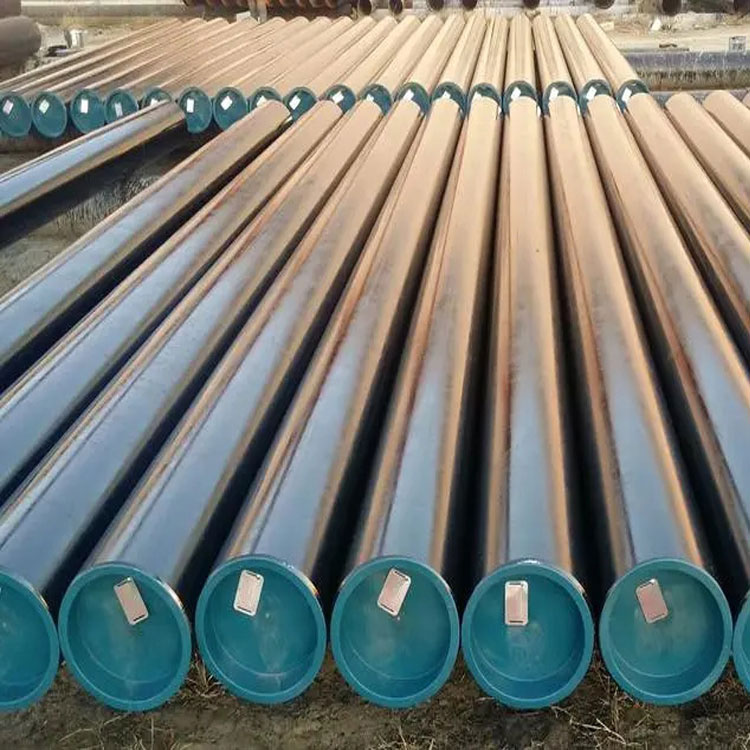
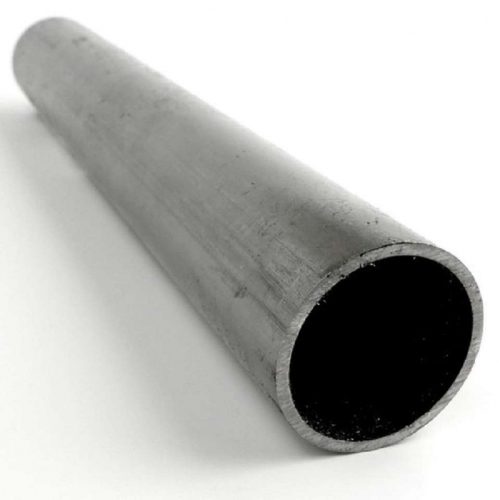
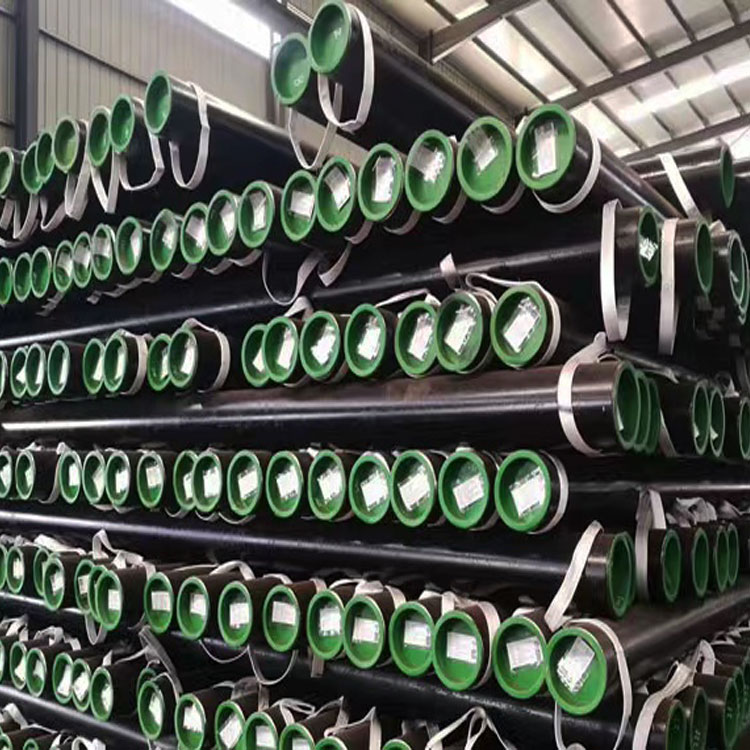
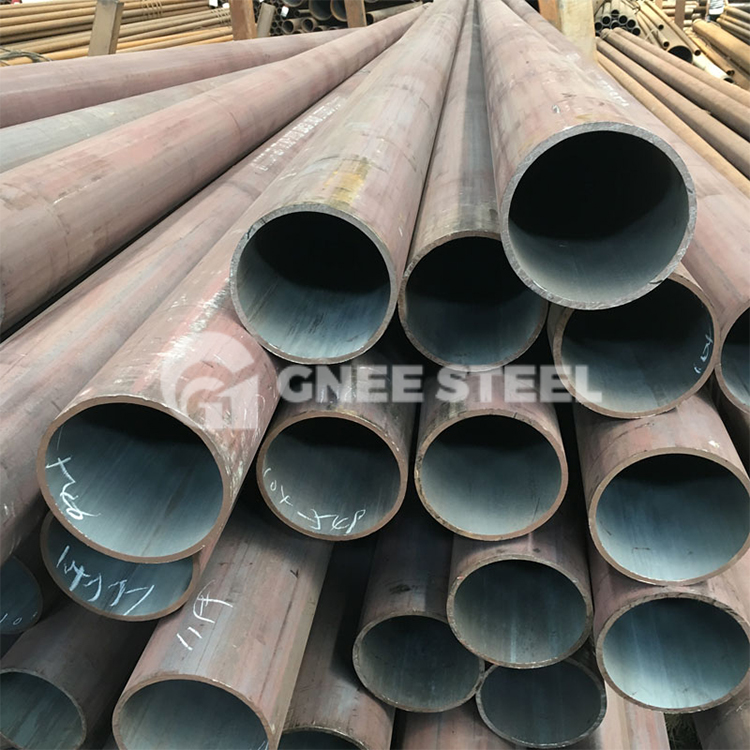
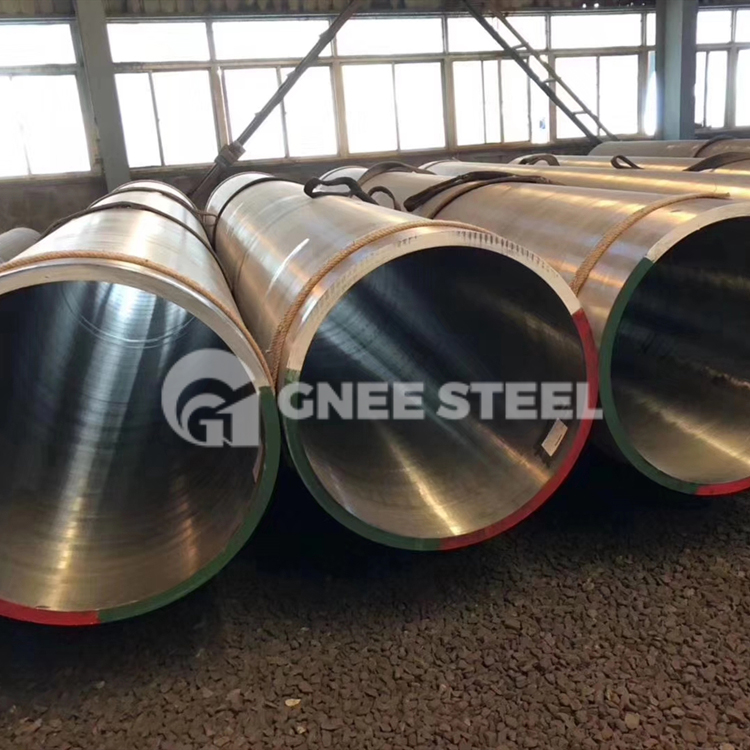
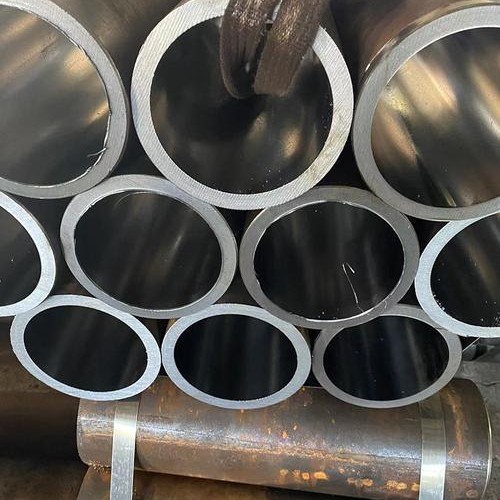
ST52.3 hydraulic cylinder tube is the barrel-grade tubing most hydraulic OEMs and repair shops still specify by its legacy DIN 2391 name — under today’s EN 10305-1 it is the same steel as E355, material number 1.0580. It is a finished component, not a raw tube: the bore is honed to ISO H8, Ra 0.2–0.4 µm, straightness ≤0.5 mm/m, in ID 32–500 mm (1.5–24 in), wall 4–50 mm, lengths to 12 m.
The number that decides your design is the delivery condition. A stress-relieved barrel (+SR / BK+S) carries a minimum yield of 450 MPa (65,000 psi), not the 355 MPa that belongs to the normalized state — and three decisions (delivery condition, size route, bore tolerance) settle everything else. This page covers what the designation commits the mill to, what you must still decide, and how to write the order so the tube that leaves the mill is still the tube that runs in service.
| Parameter | Capability |
|---|---|
| Standard | EN 10305-1:2016 (E355); DIN 2391 ST52.3 legacy |
| Inside diameter | 32–500 mm (1.5–24 in) |
| Wall thickness | 4–50 mm |
| Length | Up to 12 m; fixed and random |
| Bore tolerance | ISO 286-2 H8 standard; H9 available; H7 on request |
| Bore roughness | Ra 0.2–0.4 µm; cross-hatch 30–45° |
| Straightness | ≤ 0.5 mm/m |
| Delivery condition | +SR / BK+S standard; +N, +A, +C, +LC on request |
| End finish | Square cut, deburred, plastic caps both ends |
| Certification | EN 10204 3.1; third-party SGS / BV / TÜV on request |
| Element | Maximum (%) | Note |
|---|---|---|
| Carbon (C) | 0.22 | — |
| Silicon (Si) | 0.55 | — |
| Manganese (Mn) | 1.60 | — |
| Phosphorus (P) | 0.025 | — |
| Sulfur (S) | 0.025 | Option 2 controlled S 0.015–0.040 for machinability |
| Aluminium total (Al) | 0.020 min | Minimum, not maximum |
| DIN | EN | Condition | Rm MPa (min) | ReH MPa (min) | A % (min) |
|---|---|---|---|---|---|
| BK | +C | Cold-drawn, hard | 640 | not specified | 4 |
| BKW | +LC | Cold-drawn, soft | 580 | not specified | 7 |
| BKS | +SR | Stress-relieved (barrel default) | 580 | 450 | 10 |
| GBK | +A | Soft annealed | 450 | not specified | 22 |
| NBK | +N | Normalized | 490–630 | 355 | 22 |
| Duty | Recommended condition | Why |
|---|---|---|
| Welded cylinder barrel (ports, end caps) | +SR / BK+S | Stabilises residual stress; bore holds straightness through welding |
| Honed, then cold-formed (flare/expand/bend) | +N / NBK or +A / GBK | Retains 22% elongation for post-hone forming |
| Heavy machining, little forming | +C / BK or +LC / BKW | High strength and good chip control (Option 2 sulfur) |
| Non-pressure structural or low-duty | +N / NBK | Best ductility at lowest cost |
| Check | What it proves |
|---|---|
| Incoming mill certificate vs heat number | Chemistry and mechanics trace to the lot, not the grade |
| Ultrasonic wall integrity (mother tube) | No laminar defects before honing |
| ID, roundness, straightness at sample points | Bore is round and straight, not just on-average |
| Ra measurement on finished bore | Surface finish meets the seal specification |
| Visual + preservation | Bore and OD protected for transit |
| EN 10204 3.1 + dimensional report | Documented basis for your QA acceptance |
Send your bore size, wall, length, delivery condition and destination — our technical team confirms the specification against EN 10305-1:2016 and returns a quotation with lead time, typically within 24 hours.
Request an ST52.3 Hydraulic Cylinder Tube Quote
Yes. ST52.3 under the withdrawn DIN 2391 and E355 under EN 10305-1 are the same steel under material number 1.0580. The rename did not change the steel. Always write the standard alongside the name — ST52.3 also exists as a structural steel (material no. 1.0570) under the withdrawn DIN 17100, which is a different product.
Because the two numbers belong to two delivery conditions. The normalized state (+N / NBK) has a minimum yield of 355 MPa. The stress-relieved state used for cylinder barrels (+SR / BK+S) has a minimum yield of 450 MPa for OD up to 160 mm. Quoting 355 MPa for a stress-relieved barrel understates the design strength by about 27 percent.
Specify the stress-relieved condition: +SR under EN 10305-1 or BK+S under DIN 2391. It stabilises residual stress and dimensional stability through port and end-cap welding. Choose +N or +A only when the barrel must be cold-formed after honing (flaring, expanding, bending), accepting the lower yield.
Per EN 10305-1:2016 Table 2 cast analysis maximum: Carbon 0.22 percent, Silicon 0.55 percent, Manganese 1.60 percent, Phosphorus 0.025 percent, Sulfur 0.025 percent, with total Aluminium minimum 0.020 percent. Option 2 allows specified controlled sulfur of 0.015–0.040 percent for improved machinability. Acceptance is judged against the limit plus the product-analysis tolerance, not the limit alone.
Bore tolerance to ISO 286-2: H8 as standard, H9 available, H7 on request. Honed bore roughness is Ra 0.2–0.4 µm with a 30–45 degree cross-hatch that retains lubricating oil for the seal. Ra below about 0.1 µm is not beneficial — a mirror finish cannot hold the oil film and accelerates seal wear.
EN 10305-1 is written for nominal outside diameter up to 380 mm, which corresponds to a finished bore of roughly 320 mm. Above that the tube leaves the standard’s window and is normally supplied from a hot-rolled or mechanical tube mother tube finished by deep-hole boring, with the certificate basis agreed separately (often EN 10297-1).
EN 10305-1 sets no carbon-equivalent requirement. Using the IIW formula on the composition limits gives CEV about 0.49; a typical heat (C 0.18, Mn 1.40) is about 0.41. As a rule, CEV below 0.45 with wall under 25 mm usually needs no preheat; CEV 0.45–0.50 or wall above 25 mm calls for 100–150 °C preheat and controlled interpass temperature. CEV is not printed on the certificate — request it separately, because upper-limit and mid-range heats weld differently.
Not by name alone. S355J2H is a structural hollow section in the 1.0570 family (EN 10210 / EN 10297), governed by different requirements and a different material number from the 1.0580 tube grade. Confirm the governing standard and the exact mechanical values before substitution — the same “355” yield figure hides different product rules.