Galvanized crosses are cross-shaped pipe fittings. Four interfaces allow for the connection or branching of four pipes. The entire fitting (or its inner/outer wall) is galvanized, forming a protective zinc film that enhances corrosion resistance.
Key Features
Excellent Corrosion Resistance: The galvanized layer acts as a physical barrier, isolating water and air from the substrate, effectively preventing rust. This is particularly suitable for damp, underground, or poor-quality water environments (such as municipal sewage networks and outdoor fire-fighting pipelines).
High Adaptability: The cross structure allows for the branching or merging of four pipes. The reducing design allows for flexible connection of pipes of different diameters, reducing the use of reducing fittings and simplifying pipeline layout.
Easy Installation: Grooved connections require no welding and are quickly fixed with clamps. Threaded connections are suitable for small-diameter pipes, both shortening construction time and facilitating disassembly for later maintenance.
High Cost-Effectiveness: Compared to stainless steel crosses, galvanized crosses are more cost-effective while maintaining both corrosion resistance and strength, making them suitable for large-scale applications in civil buildings and municipal engineering.
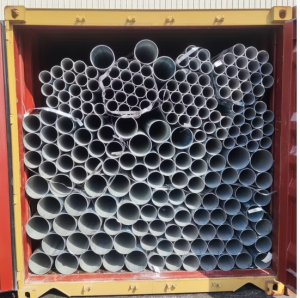
Galvanized pipe, a type of pipe made by galvanizing steel pipes, possesses excellent corrosion resistance and wear resistance. Based on different manufacturing processes, galvanized pipes are mainly divided into two categories: hot-dip galvanized pipes and electro-galvanized pipes. These properties make them widely used in various fields such as construction, manufacturing, and chemical industries.
Applications of Galvanized Pipes
In the industrial sector, galvanized pipes are used to transport gases, oils, and other fluids. For example, in HVAC systems, galvanized ducts are used for air transport; in agriculture, galvanized pipes are used for irrigation pipes and greenhouse structures. Galvanized pipes are also used as electrical conduits to protect wires and cables.
In everyday life, galvanized pipes can be seen in furniture, bicycle frames, and sporting goods. Their zinc coating provides aesthetic appeal and rust protection. It is important to note that when selecting galvanized pipes, their suitability should be assessed based on the specific application to avoid use in unsuitable environments.