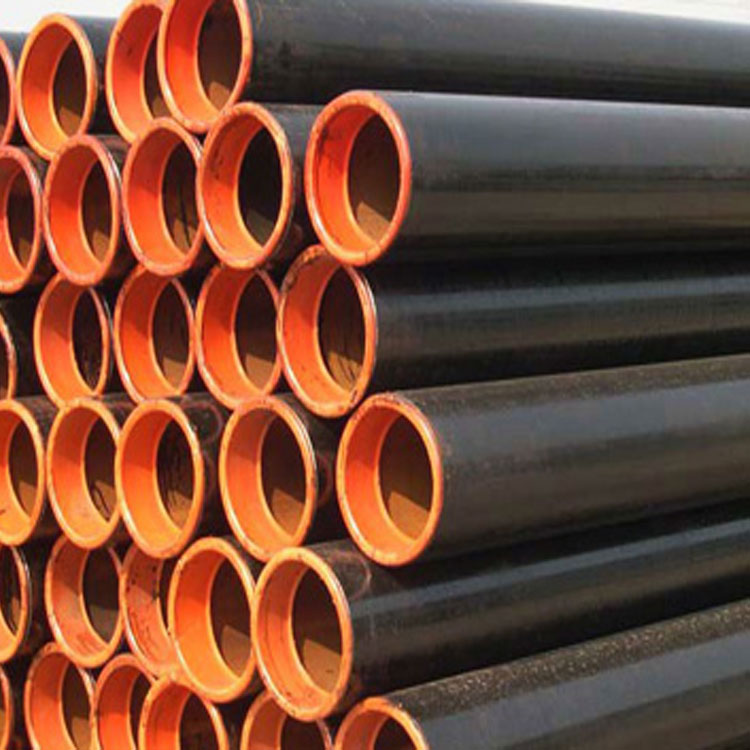
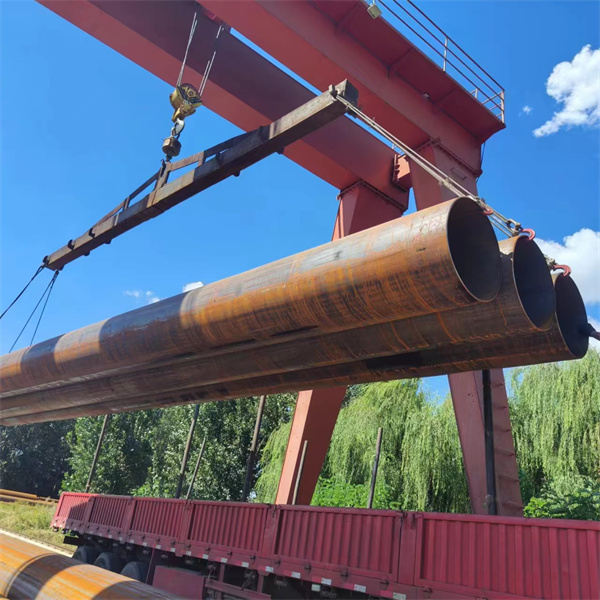
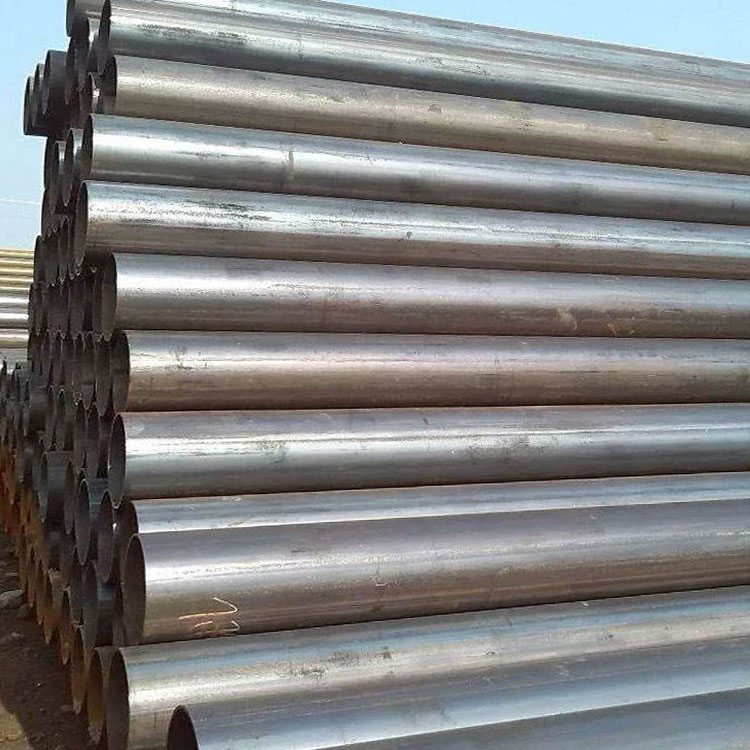
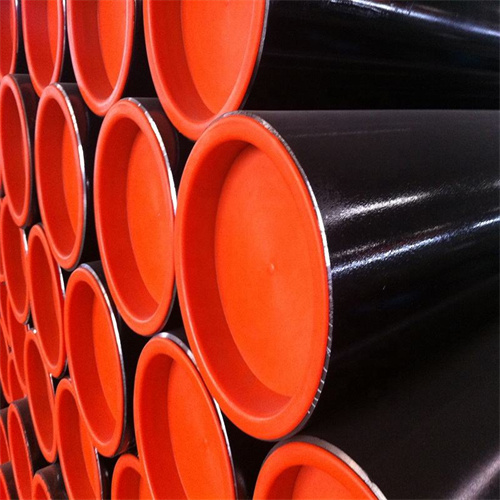
On 10 October 2026 GNEE confirmed an order for 330 joints of ASTM A192 seamless carbon steel boiler tube — 114.3 mm outside diameter with a 3.6 mm wall, in single 11.5 m lengths, totalling about 32.3 tonnes as stated on the order schedule — for a boiler fabricator in East Java, Indonesia.
| Product | Seamless carbon steel boiler tube for high-pressure service |
| Standard & grade | ASTM A192 (ASME SA192 identical) |
| Dimensions | 114.3 mm OD × 3.6 mm wall (D/t ≈ 32) |
| Length | Single 11.5 m lengths, cut to order |
| Quantity | 330 joints · 3,795 m total |
| Net weight | 32.297 t per the order schedule |
| Destination | Indonesia — East Java boiler fabrication sector |
| Order date | 10 October 2026 |
| Shipment | Ex Tianjin Xingang per the agreed production schedule |
| Certificate | EN 10204 3.1 mill certificate, heat-number traceable |
A192 proves each tube’s integrity by hydrostatic test or an equivalent non-destructive electric test — one or the other by default. Ductility and soundness are proven batch by batch:
| Test | Scope | What it proves |
|---|---|---|
| Hydrostatic test | Every tube (or NDE alternative) | Tightness under internal pressure |
| Non-destructive electric test (eddy current) | Every tube, when specified instead of hydro | Short-length laminations and imperfections the surface cannot show |
| Flattening test | Per lot, two specimens | Ductility of the finished wall — the tube is flattened to a set distance without cracking, which is the deformation it must survive when expanded into a tube sheet or bent on site |
| Flaring test | Per lot, two specimens | The tube mouth expands a set percentage without cracking — the condition of tube-to-drum and tube-to-header joints |
| Tensile test | Per lot | Strength and elongation within the grade window |
| Dimensional check | Every tube | OD and minimum wall within the A192 tolerance table |
Two points are worth a buyer’s attention. First, at 114.3 mm OD this order is well above the 25 mm threshold, so the flattening and flaring requirements apply in full — these are the tests most often missing from trading-company quotations. Second, specifying hydrostatic and eddy current together (as many boiler fabricators do) is stricter than the standard minimum and removes the manufacturer’s option to take the cheaper route. Whatever combination is agreed, it should be written into the purchase order, because the standard’s default is either-or.
Each tube carries the manufacturer’s mark, the standard and grade (ASTM A192 / A192M), the size, and the heat number, applied by stencil along the length and matched to the EN 10204 3.1 mill certificate. Heat-number traceability is what lets the fabricator’s inspector tie every installed tube back to its ladle chemistry and test results — and what lets the boiler file survive an ASME data-review audit years later. Cut-to-order lengths are handled so the stencil stays readable: marking is applied away from the cut line, and end protection keeps the bore clean during transport.
There is no exact equivalent. The nearest comparisons are GB 5310 20G in the Chinese system, EN 10216-2 P235GH and the superseded DIN 17175 ST35.8 in the European system, and JIS STB340. ASME SA192 is the same specification as ASTM A192 with identical requirements. Substitution should be verified against the boiler design code rather than assumed from a conversion table.
ASTM A192 is a minimum-wall specification: the ordered wall thickness is the value no point on the tube may fall below. This is how boiler designers size tubes against design pressure, so mills and stockists quote it the same way. Mean-wall products such as ASTM A106 state an average wall with a plus-minus tolerance instead — comparing a mean-wall price with a minimum-wall price directly is not a like-for-like comparison.
The standard requires each tube to pass either a hydrostatic test or an equivalent non-destructive electric test such as eddy current — one or the other by default. Many buyers specify both, which is stricter than the standard minimum and removes the manufacturer’s option to take the cheaper route. Flattening tests per lot and flaring tests per lot are required in addition for tube above 25 mm outside diameter, which applies to this 114.3 mm order.
114.3 mm sits at the top of the practical outside-diameter band for A192 boiler tube. Large-OD, thin-wall tubes in this size are typically downcomers, risers or large generating tubes that circulate water and steam between the drum and the furnace wall, rather than the smaller tubes of superheater elements. The order shape therefore points to the circulation side of a water-tube boiler.
Neither 6 m nor 12 m appears in this order — every tube is a single 11.5 m length. A cut-to-order length like this normally comes from a fabricator’s tube layout drawing: the boiler’s drum spacing and bend geometry set the tube length, and buying cut lengths minimises offcuts and weld joints. Longer thin-wall tubes need crate packaging and stricter straightness handling than bundled stock lengths.
A192 is a low-carbon steel tube for high-pressure boiler service, with design metal temperatures typically up to about 425–450 °C. Above that range, designers move to low-alloy grades such as A210 Grade A1 for higher strength at temperature, or to Mo and Cr-Mo grades like T11 and T22. A192 tubes must be made from fully killed steel.